
Anaemia Blood Test: What It Checks, What Low Results Mean, and What to Do Next
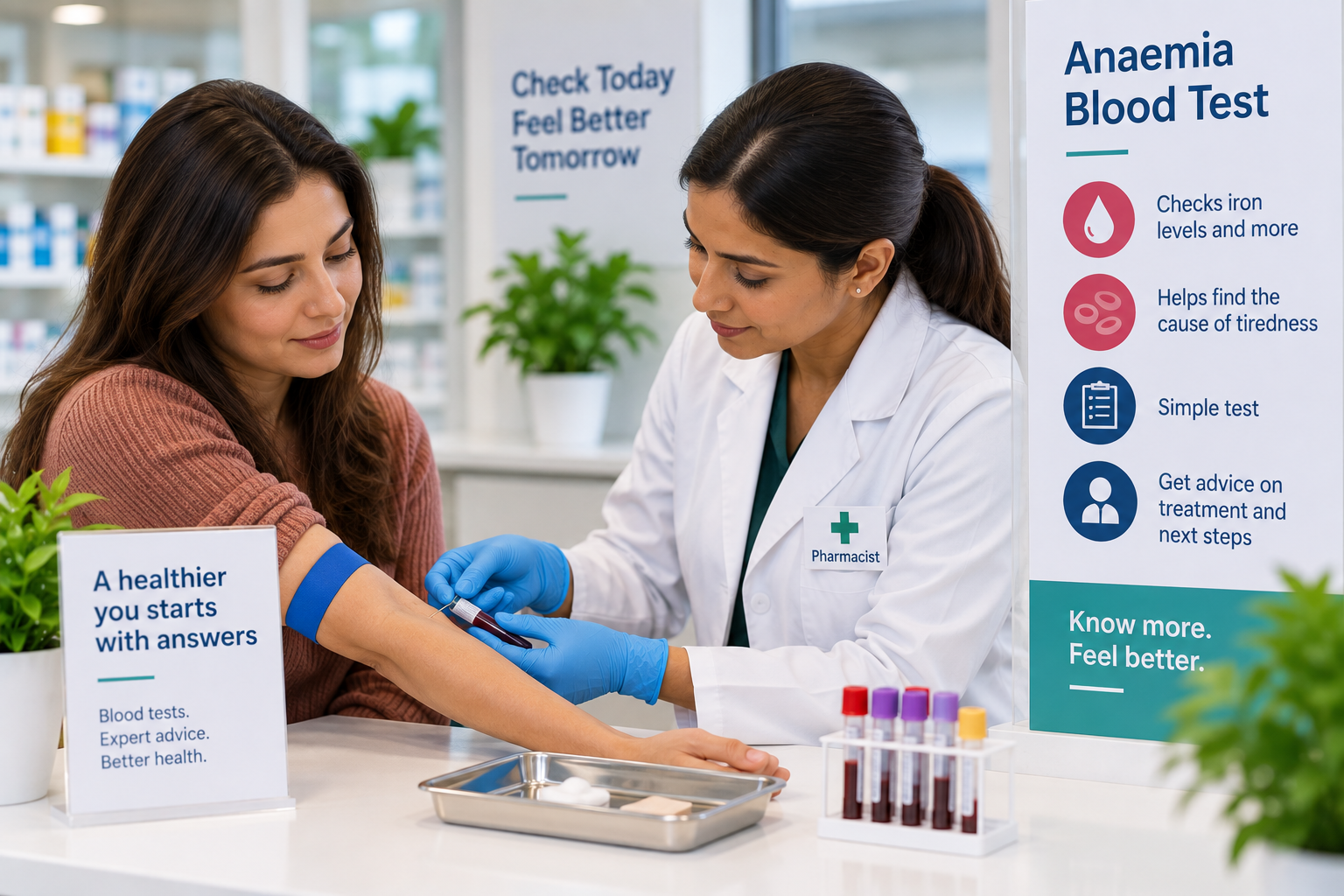
Feeling tired all the time, breathless on the stairs, or unusually pale? An anaemia blood test can help you understand what may be behind these symptoms, by checking your red blood cells and key nutrients such as iron, B12 and folate.
What Does an Anaemia Blood Test Check?
An anaemia blood test measures your haemoglobin, red blood cell count and key nutrient markers in one sitting. A typical anaemia profile blood test includes:
- A full blood count, covering haemoglobin, haematocrit and red cell size
- Iron status, including ferritin, serum iron and transferrin saturation
- Vitamin B12 and folate levels
- An inflammation marker, since infection can sometimes mask low iron
Looking at these results together can help show whether anaemia may be linked to low iron, vitamin deficiency or another cause.
Who Should Consider an Anaemia Symptoms Check?
You do not need a formal diagnosis to book a test. Common reasons people ask for one include:
- Ongoing tiredness or low energy, even with good sleep
- Pale skin, dizziness or breathlessness on exertion
- Heavy periods, a vegetarian or vegan diet, or pregnancy
- A family history of anaemia or unexplained bruising
If fatigue is your main concern rather than a full profile, our Tired All The Time panel is a more targeted option. Otherwise, a private anaemia test can help you investigate persistent symptoms without waiting for a routine appointment.
What Do Low Results Mean?
A low haemoglobin or red cell count usually points to anaemia, but the cause varies by which marker is affected. Low ferritin often suggests that your iron stores are low, which can happen because of blood loss or not getting enough iron from your diet. Low B12 or folate points toward a nutritional cause instead, and our Vitamin B12 service can help if that marker alone needs monitoring. A raised inflammation marker alongside normal iron stores can suggest anaemia of chronic disease. Your results need to be considered alongside your symptoms and medical history, so a low result does not always explain the whole picture on its own.
What Happens After a Low Result?
If your results suggest iron, B12 or folate deficiency, your pharmacist will explain what this may mean and suggest sensible next steps, such as dietary changes or a referral to your GP. Some causes need medical follow-up, so you will be given guidance on what to do next rather than being left to interpret the results yourself. Your pharmacist may also suggest browsing our wider range of blood tests if a fuller picture is needed. According to NHS guidance, a full blood count is usually the first step a GP takes when investigating suspected iron deficiency anaemia.
Book an Anaemia Blood Test Today
If you have been experiencing these symptoms and want to find out more, you can book a private anaemia blood test with Ham Pharmacy Group. We offer anaemia blood testing across Ham Parade, Ham Common and Ham Village, with results usually ready within 24 to 72 hours. Book your anaemia blood test with our team today.