
Female Hormone Blood Tests: AMH, FSH and Oestrogen — What They Mean for Fertility and the Menopause
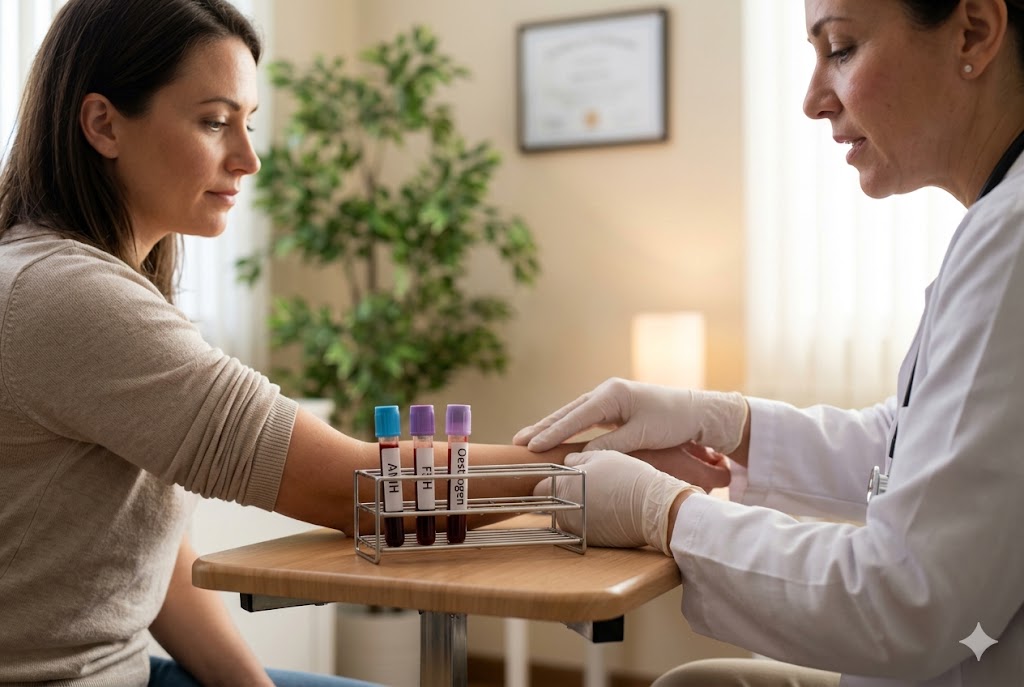
Whether you are thinking about your fertility, trying to understand irregular periods, or wondering whether your symptoms could be related to the perimenopause or menopause, female hormone blood tests can provide meaningful insight. Knowing which tests to request, what they measure and how to interpret results in context is the first step towards a clearer picture of your hormonal health.
Which Hormones Are Tested in a Female Hormone Panel?
A comprehensive female hormone blood test will typically include some or all of the following markers. Ham Pharmacy Group’s fertility and hormone blood panel is available across Kingston, Richmond, Surbiton, Teddington and Thames Ditton:
- AMH (Anti-Mullerian Hormone): a marker of ovarian reserve, used to indicate the number of eggs remaining.
- FSH (Follicle-Stimulating Hormone): helps regulate the menstrual cycle; elevated levels may suggest reduced ovarian function.
- LH (Luteinising Hormone): works alongside FSH in regulating ovulation
- Oestradiol (oestrogen): the primary form of oestrogen, central to reproductive function and affected by the menopause.
- Prolactin: a hormone that can affect menstrual regularity if elevated.
What Does an AMH Test Measure?
AMH (Anti-Mullerian Hormone) is produced by the small follicles in the ovaries and gives a reasonably stable indication of ovarian reserve, meaning the number of eggs remaining. Unlike FSH, AMH levels do not fluctuate significantly across the menstrual cycle, making it a useful baseline marker.
A lower AMH level generally suggests a reduced ovarian reserve, but this does not automatically mean fertility is absent. AMH is one piece of a broader picture. Results should always be discussed with a GP or fertility specialist in the context of your individual circumstances.
Can Hormone Blood Tests Confirm the Menopause?
Hormone tests can support a clinical picture of perimenopause or menopause, but they do not confirm it in isolation. For women over 45 with classic symptoms, NICE guidance indicates that diagnosis should primarily be based on symptoms rather than blood tests alone.
FSH levels can be informative: two raised FSH readings taken at least six weeks apart, alongside appropriate symptoms, can help support a menopause diagnosis. Oestradiol levels typically decline as the menopause approaches.
For women under 45 experiencing possible early menopause symptoms, blood tests are a more important diagnostic tool and referral to a specialist is strongly recommended.
When Is the Best Time to Take a Hormone Blood Test?
Timing matters for certain hormone tests, particularly FSH, LH and oestradiol, which are typically measured on day two or three of the menstrual cycle for the most clinically useful results. AMH can be taken at any point in the cycle. For a step-by-step guide to the testing process, read our article on what happens during a blood test and how to book one locally.
What Happens After Your Blood Test?
At Ham Pharmacy Group, your results will be made available to you with a reference range and, where appropriate, a brief explanatory note. For results that raise questions, we will advise you to discuss the findings with your GP. You can view all available tests and book via our blood testing service page. Blood test results are a starting point for a conversation, not a diagnosis in themselves.