
Earache in Adults: When Is It an Ear Infection and What Can Your Pharmacist Do About It?
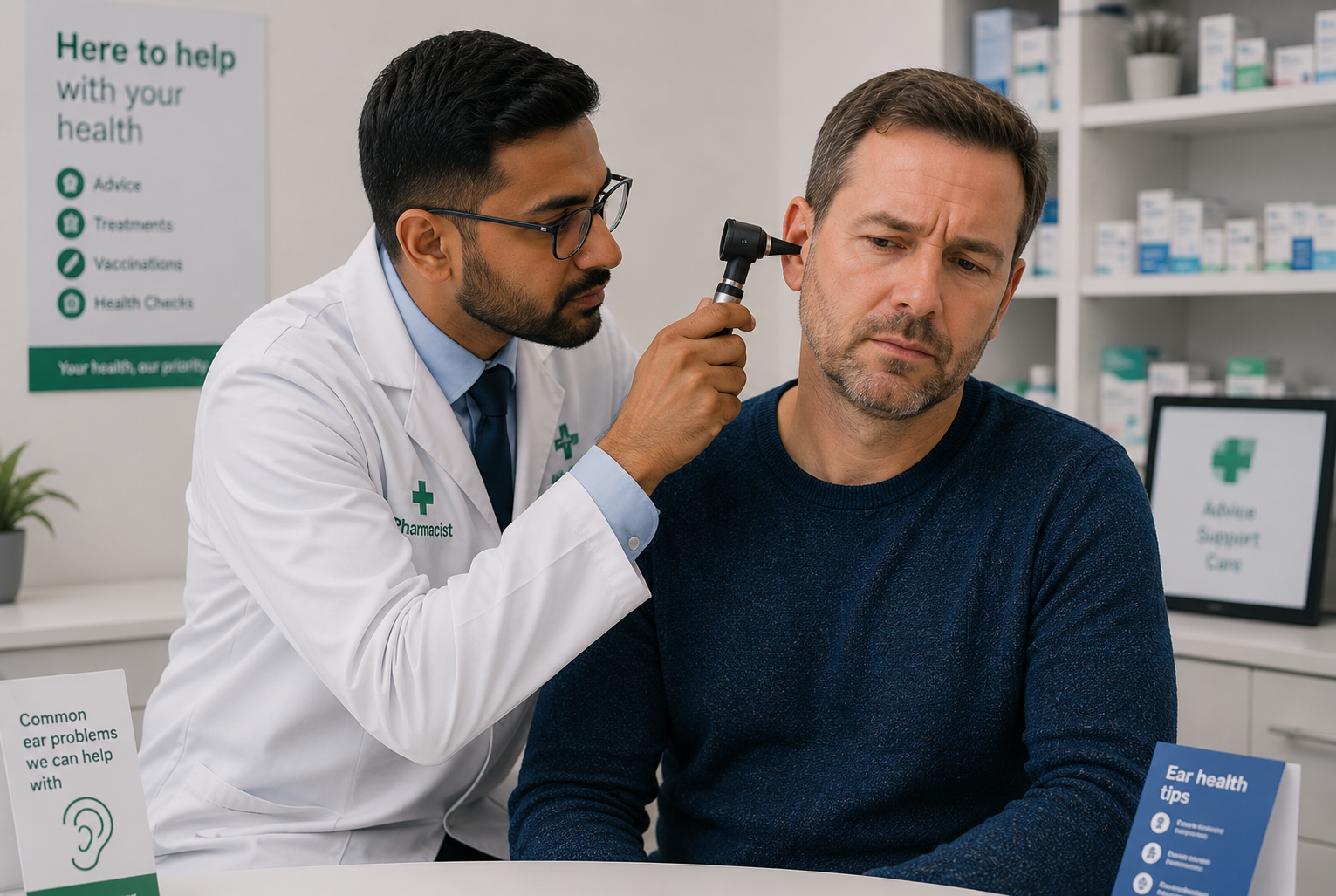
Earache in adults is usually caused by wax build-up, pressure changes or a mild, self-limiting infection, and it often settles within a few days. Occasionally, though, it can be a sign of something that needs proper assessment, so knowing what to look out for can help you decide when to seek advice.
What Usually Causes Earache in Adults?
Most adult earache is not caused by a bacterial infection at all. Common triggers include a build up of earwax, water trapped in the ear canal, sinus congestion from a cold, or pressure changes caused by flying or swimming. Jaw problems and even tooth issues can also cause pain that you feel in the ear.
How Can You Tell If It’s a Genuine Ear Infection?
Most adult earache is not caused by a bacterial infection at all. Common triggers include a build up of earwax, water trapped in the ear canal, sinus congestion from a cold, or pressure changes caused by flying or swimming. Jaw problems and even tooth issues can also cause pain that you feel in the ear.
How Can You Tell If It’s a Genuine Ear Infection?
An infection is more likely if pain is sharp or throbbing, comes with a temperature, or is accompanied by discharge, muffled hearing, or a feeling of fullness in the ear. Pain that keeps worsening over a few days, rather than easing, is also a sign worth acting on.
Can Adults Use NHS Pharmacy First for Ear Infections?
Under the current NHS Pharmacy First service in England, the earache pathway is available for children and young people aged 1 to 17. Adults are not currently covered under this specific pathway, so an adult with earache cannot receive treatment for this condition through Pharmacy First.
What Can Your Pharmacist Still Do for Adult Earache?
A pharmacist can still assess your symptoms, help you work out whether earwax or another common cause could be behind the pain, and recommend appropriate over the counter options such as pain relief or ear drops to soften wax.
If your symptoms suggest an infection that needs further assessment, or if you have any warning signs, your pharmacist can advise you on the next step. This may include contacting your GP or NHS 111.
When Should You See a GP or Seek Urgent Help?
Speak to your GP or NHS 111 if pain is severe, you have a high temperature, there is discharge or bleeding from the ear, your hearing suddenly changes, or symptoms last more than three days without improving. Swelling or redness behind the ear needs urgent attention, as does earache alongside a stiff neck or severe headache.
Get Advice From Your Local Pharmacy Team
Not sure whether your earache needs pharmacy advice or a GP appointment? Our pharmacy team can talk through your symptoms and help you decide what to do next.
Available at our Ham Parade and Ham Village Pharmacies, supporting patients across Richmond, Kingston, Teddington, New Malden, Surbiton, Twickenham, Isleworth, Hampton, Molesey, Thames Ditton, Long Ditton, Tolworth, Sunbury-on-Thames, Walton-on-Thames, Esher, Hersham, and Worcester Park.