
Female Hair Loss: Causes, Treatment Options, and When to Seek Professional Help
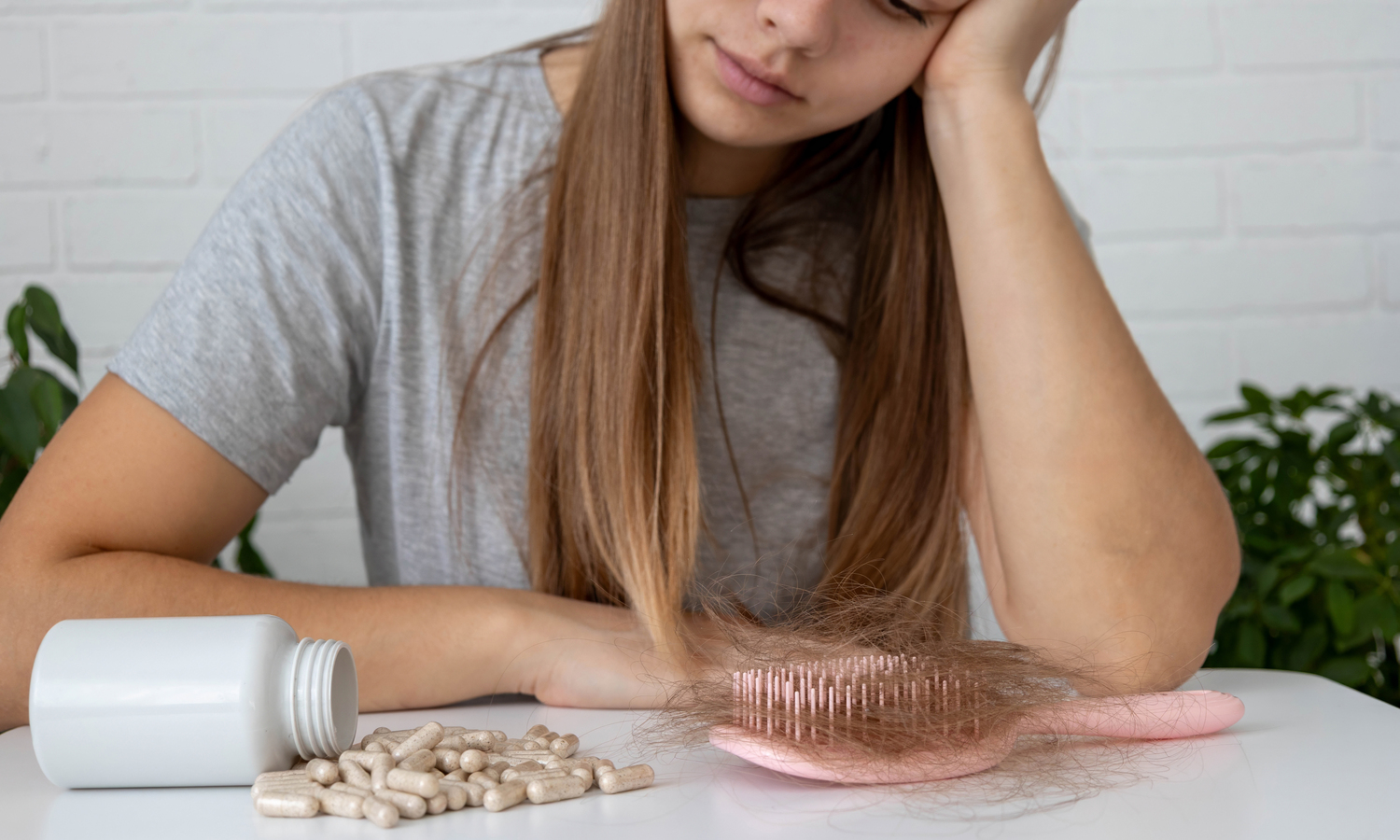
Maybe it started with more hair in the shower drain than usual, or a parting that suddenly looks a little wider in the bathroom mirror. If you have noticed your hair thinning, you are far from alone, and it is completely understandable to feel worried.
Hair is tied up with how many of us feel about ourselves, so even small changes can knock your confidence. The reassuring part is that female hair loss is very common, often has a clear cause, and in many cases can be managed or improved with the right support.
What Causes Hair Loss in Women?
Female hair loss is usually triggered by hormones, genetics, stress or a nutritional shortfall, and many women have more than one factor at play.
Hormonal Hair Loss in Women
Hormonal changes are a very common trigger. Postpartum hair loss often appears around three months after giving birth and usually settles on its own. Menopause, polycystic ovary syndrome (PCOS) and thyroid problems can also lead to women’s hair thinning, which a simple blood test can help identify.
Female Pattern Baldness
Female pattern baldness causes gradual thinning over the crown and parting, while the front hairline usually stays in place. The NHS notes that this type of hair loss often runs in families and becomes more common with age.
Stress, Illness and Low Nutrients
Shock, surgery, illness or significant stress can push more hair into its shedding phase, known as telogen effluvium. Low iron is another frequent culprit, so an anaemia blood test is a sensible first step.
Which Hair Loss Treatment Options Are Available for Women?
The right hair loss treatment depends on the cause, so treating the root problem always comes first.
- Topical minoxidil: available from pharmacies for female pattern hair loss. It needs daily use, and results usually take several months.
- Correcting deficiencies: if tests show low iron or vitamin B12, replacing them may help if the deficiency is contributing to your hair loss.
- Gentle hair care: avoiding tight hairstyles, harsh chemicals and excessive heat reduces strain on the hair.
Pharmacist’s tip: minoxidil can cause increased shedding when treatment starts. This can be temporary, so try not to give up too early.
When Should You Seek Professional Help?
You should seek advice if your hair loss is sudden, patchy or accompanied by other symptoms, as these can point to an underlying condition. Speak to a pharmacist or GP if you notice:
- Round bald patches, a possible sign of alopecia areata
- Itching, redness or scaling on the scalp
- Tiredness, weight changes or irregular periods alongside thinning
- Hair loss affecting your confidence or wellbeing
Before starting any treatment, a nutritional blood test can help rule out common deficiencies that are easy to miss.
Get Expert Support for Hair Loss at Ham Pharmacy Group
You do not have to work this out alone. Our friendly pharmacists at Ham Parade, Ham Common and Ham Village will listen, arrange any tests you need and help you find a treatment plan that feels right, all in a private, unhurried setting.
Book your confidential consultation today and take that first step together.